Leadership * Experience *
Adventure * Development *
A learning experience that activates development.
Leadership, Experientially learned, including Adventure-based opportunities, for individual, intact team, and organizational Development.
Subscribe so you never miss an opportunity for adventures in leadership.
Find better results experientially; connecting with your team and becoming a great leader.
Brussels European Forum
University Undergraduate and Graduate Students
00
DAYS
00
HOURS
00
MINS
00
SECS
For pricing and more information, please fill out this form.
Adventures in Leadership Podcast
ADVENTUROUS. INFORMATIVE. EMPOWERING.
Looking to develop your leadership skills in a unique and exciting way? Check out our podcast, where we explore how adventure can help you become a better leader. Join us as we chat with experts and share stories of people who built confidence, communication skills, and teamwork through adventure. Listen in and discover how you can take your leadership capacity to the next level, all while enjoying memorable experiences. Subscribe so you don't miss out on this exciting and informative podcast!
LISTEN TO THE PODCAST
LEADERSHIP LEARNING EXPERIENTIALLY
Leadership is the capacity to influence and align others toward a shared purpose. It is learned far less from instruction than from experience — which is why development must be activated, not delivered.[1]
EXPERIENCE THROUGH ADVENTURE
Adventure-based experiential learning produces measurable gains in cognitive, interpersonal, and intrapersonal capability. The effects are real, they are measurable, and — unusually among learning interventions — they continue to grow after the program ends.[2]
ADVENTURE ACTIVATES DEVELOPMENT
Real challenge. Genuine ambiguity. Honest feedback. An environment safe enough to risk being seen. Trust is defined in the research literature as the willingness to be vulnerable — which makes vulnerability not the opposite of strong leadership, but the mechanism by which trust is built. And trust is what makes everything else in leadership possible.[3]
DEVELOPMENT THAT PRODUCES RESULTS
Well-designed leadership development improves what people learn, what they carry back to the job, and what the organization gets in return. Design is what separates programs that produce results from programs that produce memories.[4]
EXPERIENCE THAT OUTLASTS YOU
Experienced leaders consistently feel younger than the calendar says — by about twenty percent, and it holds steady from forty onward. That isn't vanity; it's one of the most reliable findings in adult development.[5] What these leaders are missing isn't youth. It's somewhere to put what they have become. The middle of a career is not a crisis to be managed. It is the season of greatest capacity, when the question quietly shifts from what can I still achieve to what will I leave behind.[6] The oldest and best test of a leader is whether the people they serve grow — healthier, wiser, more capable, more likely to lead in their own right.[7] Adventure gives that question somewhere to happen. And it lands hardest when a leader answers it alongside the people they are building.
L-E-A-D.CO
[1]Day, D. V. (2000). Leadership development: A review in context. The Leadership Quarterly, 11(4), 581–613. https://doi.org/10.1016/S1048-9843(00)00061-8; Kolb, D. A. (1984). Experiential learning: Experience as the source of learning and development. Prentice-Hall.
[2]Tyne, W. P., Fletcher, D., Paine, N. J., & Stevinson, C. (2024). Physical challenge interventions and the development of transferable skills for the workplace: A systematic review and meta-analysis. Organizational Psychology Review. https://doi.org/10.1177/20413866241245301; Hattie, J., Marsh, H. W., Neill, J. T., & Richards, G. E. (1997). Adventure education and Outward Bound: Out-of-class experiences that make a lasting difference. Review of Educational Research, 67(1), 43–87. https://doi.org/10.3102/00346543067001043
[3]Mayer, R. C., Davis, J. H., & Schoorman, F. D. (1995). An integrative model of organizational trust. Academy of Management Review, 20(3), 709–734. https://doi.org/10.5465/amr.1995.9508080335; Dirks, K. T., & Ferrin, D. L. (2002). Trust in leadership: Meta-analytic findings and implications for research and practice. Journal of Applied Psychology, 87(4), 611–628. https://doi.org/10.1037/0021-9010.87.4.611; DeRue, D. S., & Wellman, N. (2009). Developing leaders via experience. Journal of Applied Psychology, 94(4), 859–875. https://doi.org/10.1037/a0015317; Edmondson, A. C. (1999). Psychological safety and learning behavior in work teams. Administrative Science Quarterly, 44(2), 350–383. https://doi.org/10.2307/2666999; Covey, S. M. R. (2006). The speed of trust. Free Press; Brown, B. (2018). Dare to lead. Random House.
[4]Lacerenza, C. N., Reyes, D. L., Marlow, S. L., Joseph, D. L., & Salas, E. (2017). Leadership training design, delivery, and implementation: A meta-analysis. Journal of Applied Psychology, 102(12), 1686–1718. https://doi.org/10.1037/apl0000241
[5]Rubin, D. C., & Berntsen, D. (2006). People over forty feel 20% younger than their age: Subjective age across the lifespan. Psychonomic Bulletin & Review, 13(5), 776–780. https://doi.org/10.3758/BF03193996; Wettstein, M., et al. (2023). Younger than ever? Subjective age is becoming younger and remains more stable in middle-age and older adults today. Psychological Science. https://doi.org/10.1177/09567976231164553
[6]Erikson, E. H. (1950). Childhood and society. Norton; McAdams, D. P., & de St. Aubin, E. (1992). A theory of generativity and its assessment through self-report, behavioral acts, and narrative themes in autobiography. Journal of Personality and Social Psychology, 62(6), 1003–1015. https://doi.org/10.1037/0022-3514.62.6.1003
[7]Greenleaf, R. K. (1977). Servant leadership: A journey into the nature of legitimate power and greatness. Paulist Press; Eva, N., Robin, M., Sendjaya, S., van Dierendonck, D., & Liden, R. C. (2019). Servant leadership: A systematic review and call for future research. The Leadership Quarterly, 30(1), 111–132. https://doi.org/10.1016/j.leaqua.2018.07.004
LEARN THROUGH ACTION.

Offerings
Contact Us

Coaching


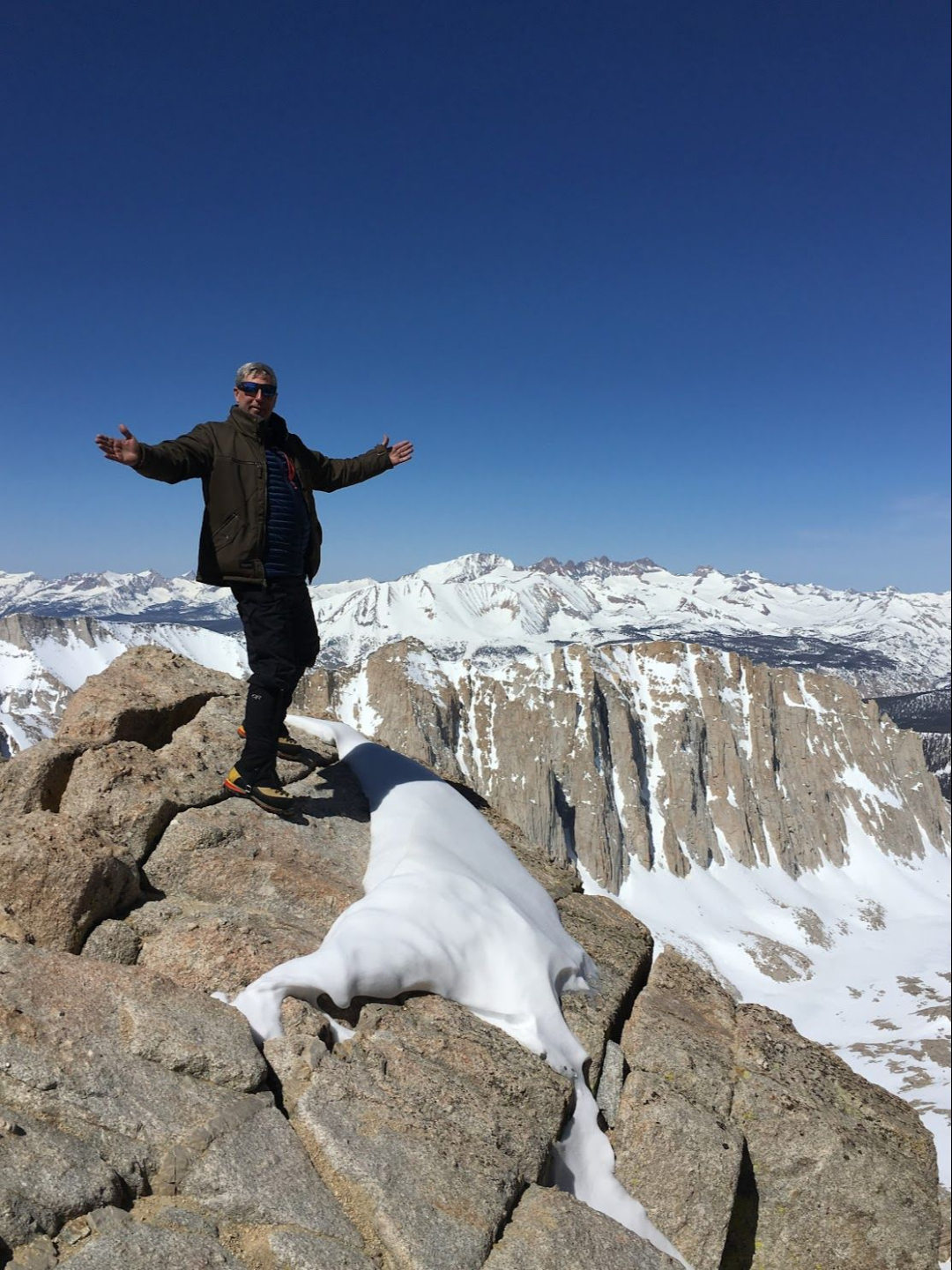

NEXT LEVEL LEARNING.
L-E-A-D is an authorized partner of "The Five Behaviors" personal and team development program. L-E-A-D uses this curriculum to take your experience to the next level of leadership development.
Testimonials

Niksa and Nives Jacsic, Nihon Ltd.
“After our workshop, our team felt more capable of operating effectively as a team. We understand ourselves better and our teammates better, and are implementing what we discovered and learned into everyday practice. Bruce opened our eyes to new and better ways to operate as a team. We highly recommend L-E-A-D to any team or organization wanting to level up their performance.”
Jordan D. Mathis, Director/Health Officer - Bear River Health Department and Intermountain Health Care
"Dr. Popa offers a learning experience couched in an adventure that you will never forget and will add depth, strength, resilience, and fortitude to your leadership practice."
Colonel Brad "Pedro" Bashore, 388th Fighter Wing, USAF, Retired
What an incredible day dedicated to leadership learning...with our team! We had an indelible values and mindset workshop focused on "High Altitude Leadership in High Stakes Teams." I highly recommend booking your next leadership laboratory and team adventure with L-E-A-D.CO.